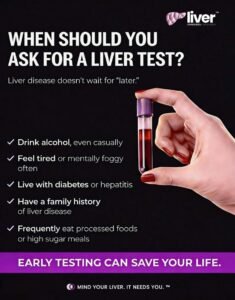

When Should You Ask for a Liver Test?
When Should You Ask for a Liver Test?
We are here because liver disease is increasingly affecting young adults.
From metabolic conditions and alcohol to medications, viral hepatitis, autoimmune liver diseases, and other causes, liver disease does not belong to one age group, one lifestyle, or one story.
Yet many young people are not thinking about their liver at all.
Liver disease can develop quietly, with few obvious symptoms in its early stages. Understanding your individual risk factors and knowing when to speak with a healthcare provider about liver testing can help bring liver health into the conversation earlier.
Young Adults Have Liver Risks Too
Being young does not automatically mean your liver is healthy.
Young adults can be affected by alcohol-associated liver disease, metabolic dysfunction-associated steatotic liver disease (MASLD), viral hepatitis, autoimmune liver diseases, medication-related liver injury, and other liver conditions.
That is why liver health education and awareness need to start earlier.
You may want to discuss your liver health with a healthcare provider if you:
- Drink alcohol
- Live with diabetes, obesity, high cholesterol, or other metabolic risk factors
- Have hepatitis B or hepatitis C
- Have a family history of liver disease
- Take medications or supplements that may affect the liver
- Have previously been told that your liver enzymes are elevated
- Experience persistent or unexplained symptoms that could warrant further investigation
Having a risk factor does not mean you have liver disease. It means there may be a reason to have a conversation about whether further assessment is appropriate for you.
Liver Disease Does Not Always Come With Obvious Warning Signs
One of the main challenges with liver disease is that significant damage can occur before noticeable symptoms appear.
Fatigue, changes in appetite, abdominal discomfort, nausea, or difficulty concentrating can have many possible causes and do not automatically indicate liver disease. More advanced liver disease can cause symptoms such as jaundice, abdominal swelling, itching, easy bruising or bleeding, and confusion.
Because symptoms alone cannot tell you how healthy your liver is, testing and clinical assessment can be important when risk factors are present.
What Does Liver Testing Involve?
A healthcare provider may begin with blood tests that measure markers associated with liver injury and liver function.
Depending on your medical history, risk factors, symptoms, and initial results, additional assessment may include imaging or non-invasive testing such as an ultrasound or FibroScan, which can help assess liver stiffness.
Liver blood tests and tests that assess liver fibrosis provide different information. Blood test results alone do not always provide a complete picture of liver health.
Your healthcare provider can determine which tests, if any, are appropriate based on your individual circumstances.
Don’t Wait Until You’re Older to Think About Your Liver
Liver health is relevant at every age.
Young adults should not have to wait until they are seriously unwell to learn about liver disease or understand their own risk factors. Earlier awareness creates an opportunity to ask questions, speak openly with a healthcare provider, and take action when appropriate.
Know your risks. Ask questions. Mind your liver.
Mind Your Liver. It Needs You.®